
book, childhood, real story
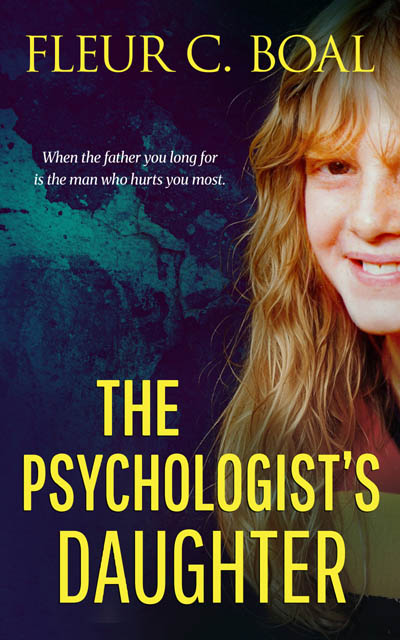
The Psychologist’s Daughter
The Psychologist’s Daughter explores glaring discrepancies in one man’s professional and personal lives and the consequences of these extremes on his family. Although he was a psychologist, revered among academic and professional peers, the John Redman that Fleur knew at home was a painful enigma−cruel and explosive, distant but protective. Could Fleur ever have a true relationship with her father or be certain of his love for her?
As a memoir in four parts, reflecting different stages of the author’s life, The Psychologist’s Daughter is unembellished yet emotive, drawing the reader into the sense of pathos that prevails throughout the book. Fleur’s story reveals the deep effects of her father’s traumatising and volatile personality during her upbringing and growth as a woman.
Fleur candidly shares the painful impact of family breakdown, the longing associated with a missing brother, (which captured national attention), and what it felt like to live under the shadow of her father’s unrelenting rejection. This is a story that will resonate with readers who know the sting of heartache from broken relationships; it is also a story of hope. Through sheer perseverance and spiritual strength, Fleur surrenders unhealthy escapes and exchanges the lie of worthlessness for an improved self-identity and a sense of wholeness. [buy_now_dropdown]
Leah Thomsen –
Few relationships shape us more profoundly than the one we have with our father. For some, that relationship is a source of security and affection, but for others, it is a lifelong ache marked by disappointment, trauma, and the unmet longing to be cherished and loved.
In her debut book, The Psychologist’s Daughter, Fleur C. Boal explores that ache with tender honesty and the grace of a woman who walks with God. On first glance, you may assume that this is simply a memoir about growing up with a distant and complicated father. And while it is that, it is also so much more. Woven into the narrative of her complicated, chaotic, and at times heart-wrenching family history lies a nuanced exploration of identity, forgiveness, generational trauma, brokenness, and—most importantly—the healing power of God.
Fleur writes with a compelling voice and a natural flow as she traces her story from childhood into adulthood. As she does so, she invites readers to consider how Christ meets us in our darkest moments to reveal Himself, His power to heal, and His power to make us whole. With the grace of a woman who has been transformed by God’s love, Fleur’s heart, laid bare for us to see, is what sets her story apart.
While many memoirs assign blame, reopen wounds, and are written with an underlying tone of accusation, Fleur’s compassion is striking and moving—the fruit of a woman who truly abides in the vine and is bearing the fruit of the Holy Spirit Paul describes in Galatians 5:22.
Yet Fleur doesn’t trivialize her trauma or explain it away. Many of her reflections on her childhood had my heartstrings knotted and my heart rate elevated. But throughout it all, she extends Christlike forgiveness toward those who hurt her. It’s a powerful portrait of the Gospel’s power to restore and redeem, and of the Holy Spirit’s indwelling empowerment to help us do what seems impossible on our own. This is what imbues her memoir with lasting ministry impact in a crowded Christian memoir space.
Particularly compelling is the fact that the central figure is a psychologist—a man trained to understand human behavior and emotional well-being—yet Fleur’s father was unable to prevent deep fractures within his own family. Boal handles this irony thoughtfully, setting the limits of human knowledge against the transforming work of God. This juxtaposition of faith and psychology runs throughout the book and finds beautiful expression in lines like:
“My identity was not reduced to a flawed theory.… The Lord searched my heart’s complexities, though he already knew me, and his conclusions were absolute” (pp. 30–31).
Theologically, the book’s greatest strength is its unwavering emphasis on Gospel-empowered grace. Boal understands that forgiveness is not the same as pretending wrongs never occurred. Rather, she presents true forgiveness as a distinctly Christian act, rooted in the character of God. Again and again, she returns to the truth, demonstrated in Scripture, that compassion and forgiveness are powerful and have the capacity to disrupt and break negative generational cycles.
The Psychologist’s Daughter is not simply a story about a father. It is a story about one woman’s discovery of the faithfulness of her Heavenly Father and how she was changed as a result.
This is a great read, hard to put down, deeply inspiring, and perfect for anyone who is carrying family trauma, navigating estrangement, wrestling toward forgiveness, or searching for hope amid broken relationships. I recommend it to any pastor or ministry professional working in the counseling, mentorship, and discipleship space. It is also a worthwhile read for any Christian who appreciates memoirs that engage both the heart and the mind.
I am grateful for Fleur’s ministry, her writing, her heart, and her courage to share her testimony while letting Christ’s grace have the final word. I have no doubt that this book and its author will continue to bless the body of Christ in mighty ways!