
When ‘Homecoming’ plays on my phone to wake me up at 6:00am, I switch it off to roll over and get more sleep. But it’s market day, so I get up anyway. I live in a highlands province in Papua New Guinea and it may or may not be raining, but it’s always humid. More often than not, I wear a meri blouse which is traditionally worn by Papua New Guinean women. While it doesn’t suit my body type, the floral pattern works for me. I wear it out of respect for the Papua New Guineans, often reminding myself that I am a guest in their country.
My local, outdoor market is located in a rural setting and is solely run for expatriates. It is a safe place and a mostly quiet, transactional affair. It’s also an invaluable opportunity to test my Tok Pisin (talk pidgin), which at this stage includes simple words and short phrases. For example: if I want to buy a pile of lemons I will ask, “Mi laik baim muli” or if I plan to return to the same stall next time, I will say with a smile, “Lukin yu”.
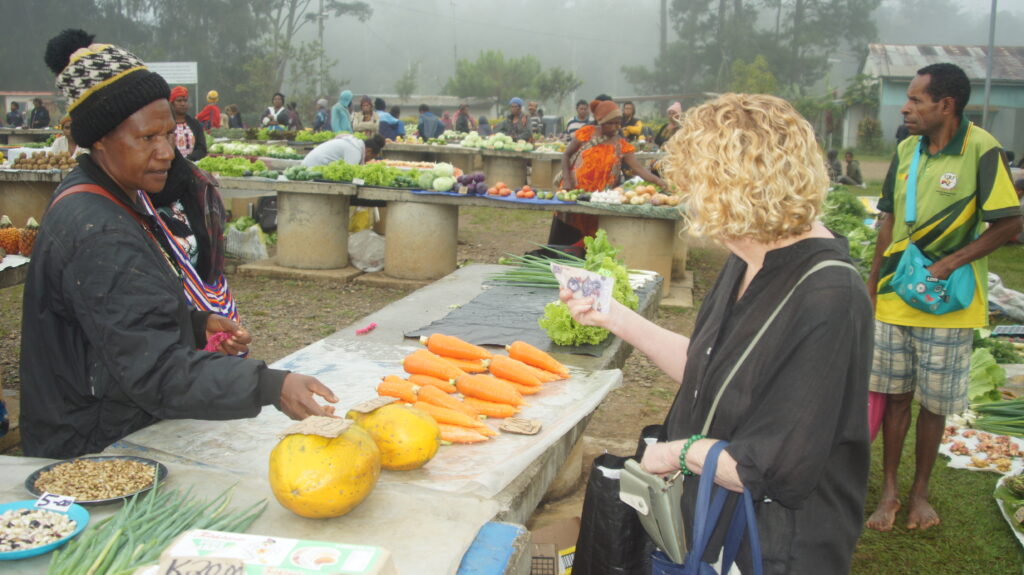
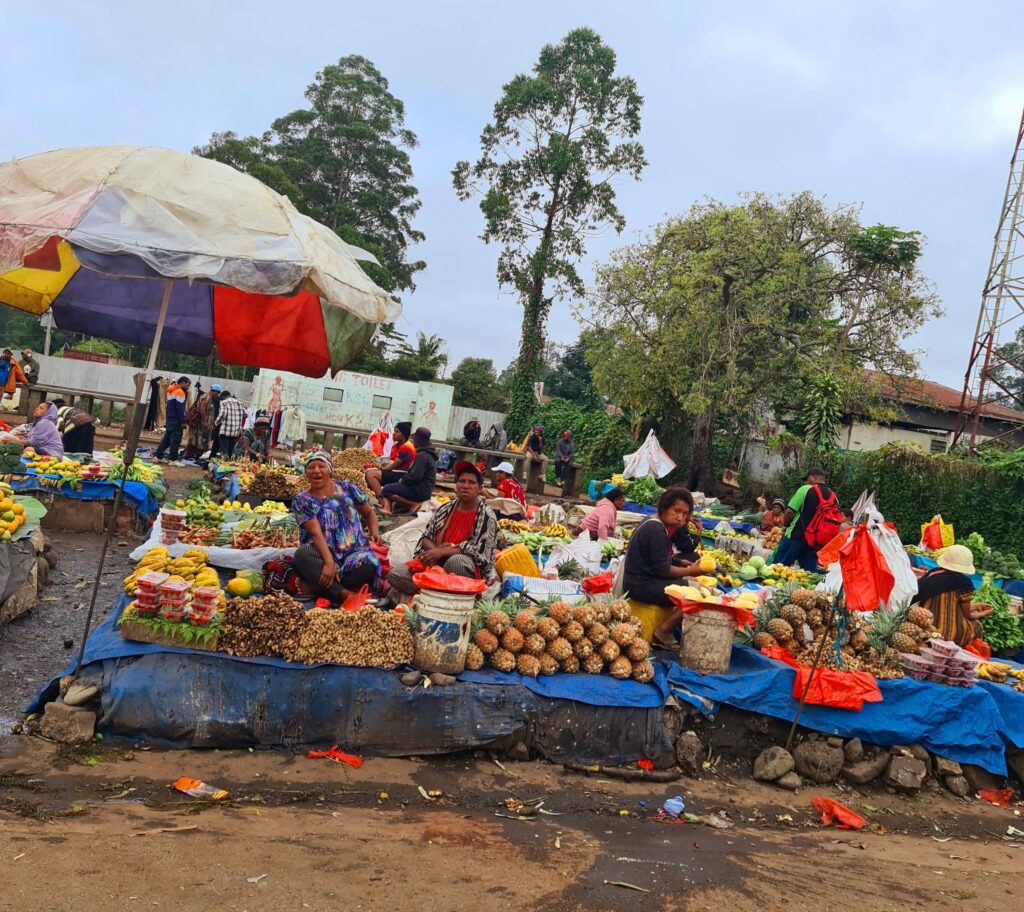
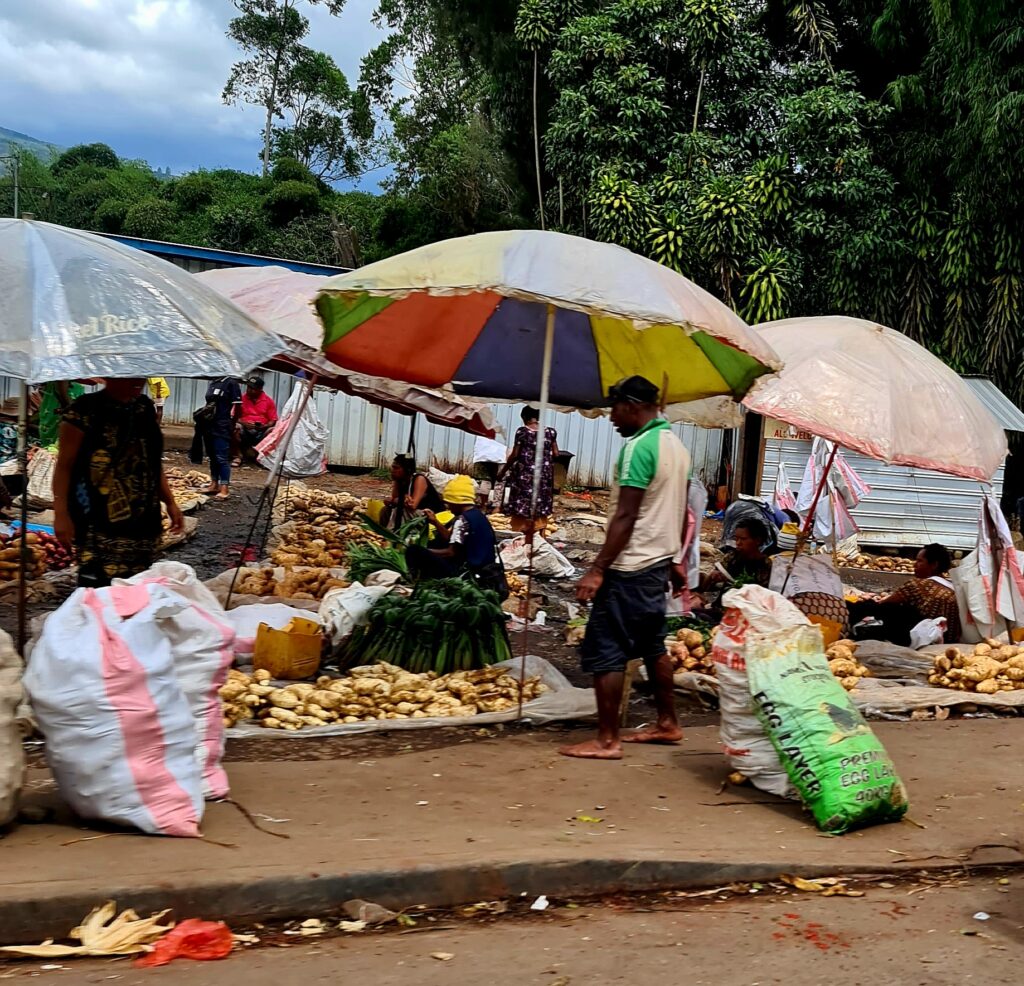
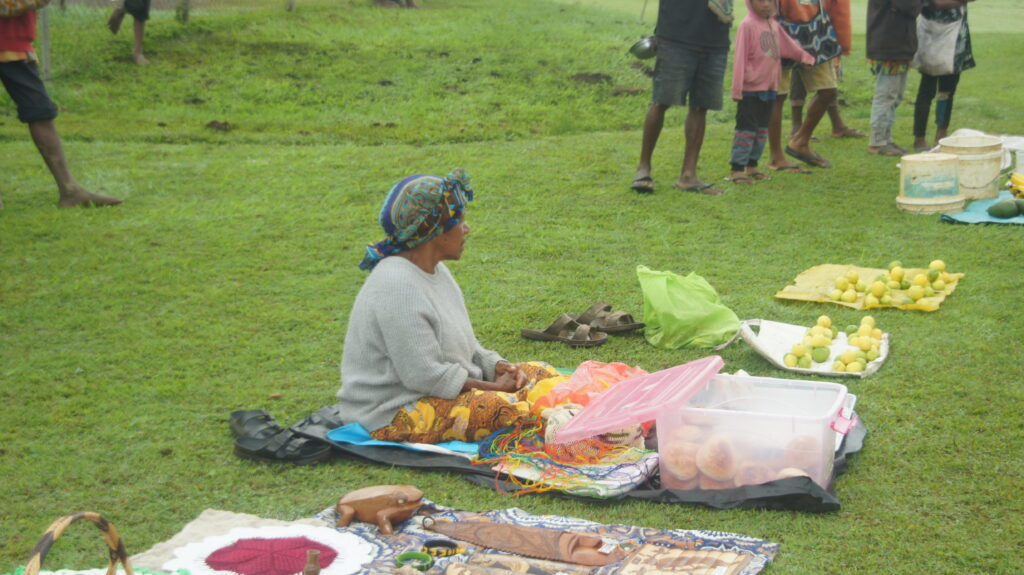
My experience of urban markets in the highland provinces are quite different as they are bustling, noisy, dirty places stinking of body odour and ethylene gas from fruit and vegetable waste tossed in heaps beside local produce. Tropical pineapples, kau kau (sweet potato), sugar fruit, tree tomatoes and the like add an array of colours, along with the stall holders’ brightly patterned meri blouses. These women are warm and welcoming and are amused by clueless expatriates like me, but willingly help with my pidgin and something else I may need.
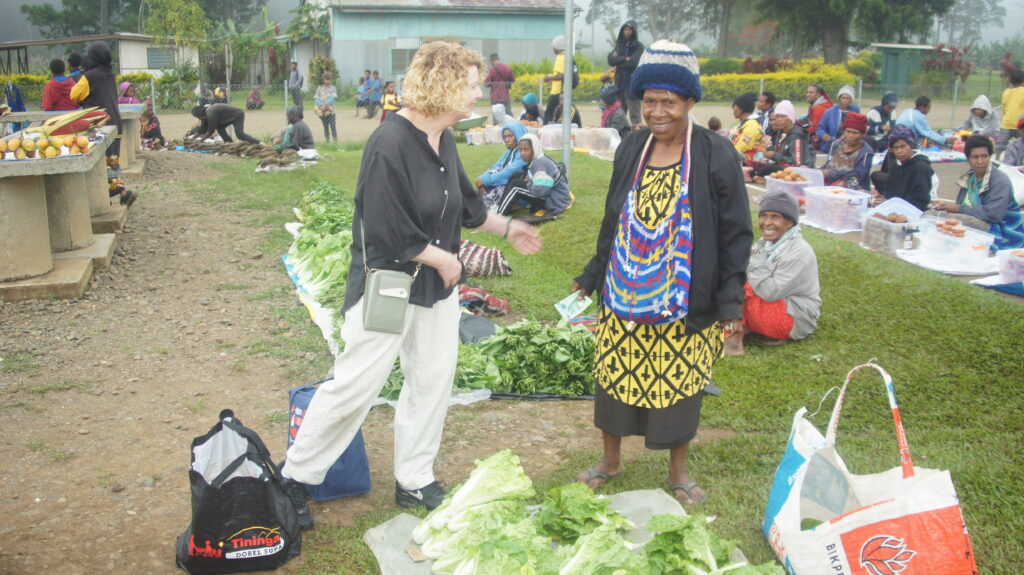
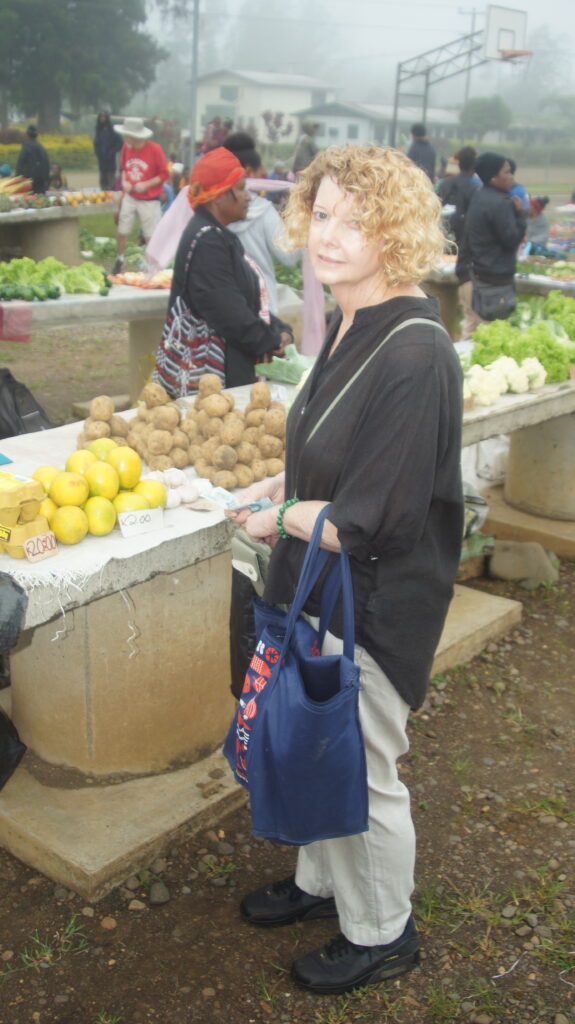
Safety is always a consideration in a developing country, and Papua New Guinea is no exception. I’m acutely aware of my security training when I visit the city market places and never take risks to avoid risky situations. I choose when I go, who I go with and only take what I need.
Once I’m home, I soak the fruit and vegetables in white vinegar and water to maximise food safety. For the first six months I suffered terribly from foodborne illness but now I’ve adapted, mostly! Highlander produce really is appealing. The abundance of bananas means a never ending supply of muffins and smoothies and I’ve been experimenting with new recipes like pineapple ice-cream and chocolate avocado mousse, which is a hit with the teenagers I live with.
It may be dark and rainy, but when it comes to the market, it’s always worth getting up early in the morning.
Hi Fleur, loved reading your blog. I will certainly enjoy following it. You are very brave, adapting to the food and customs. May God bless your wirk. I Will keep you in prayer.